Cottage cheese blends into a thick, tangy base that freezes like cheesecake ice cream. It became popular as a high-protein dessert because the main ingredient carries the protein.
The same base works in a pint-style machine and in a churn machine. A churned batch is soft straight away; a pint needs a full day in the freezer first.
Works in
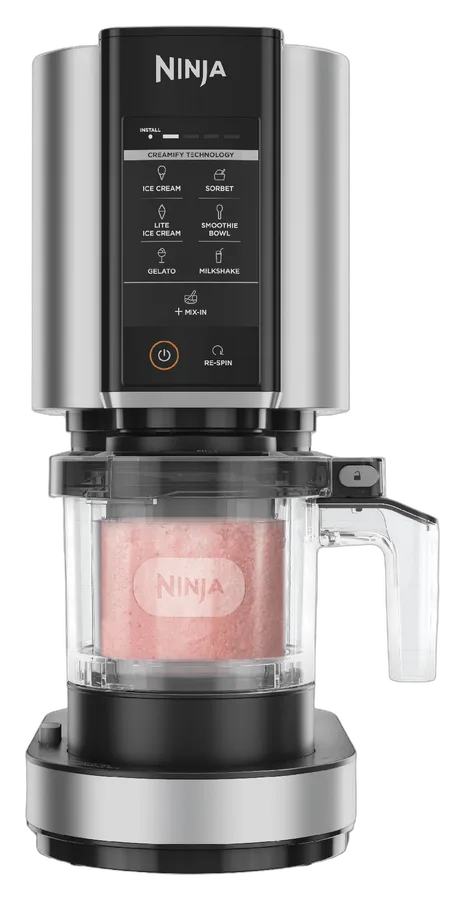 Freeze-then-spin pint machineLITE ICE CREAM then ICE CREAM then RE-SPIN programs
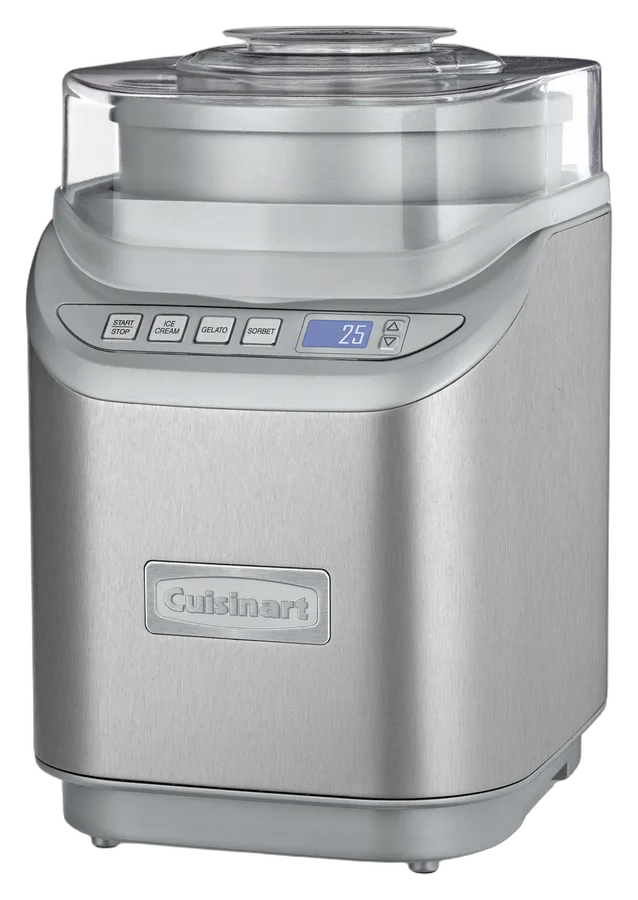 Freezer bowlA double-walled bowl goes in the freezer the day before
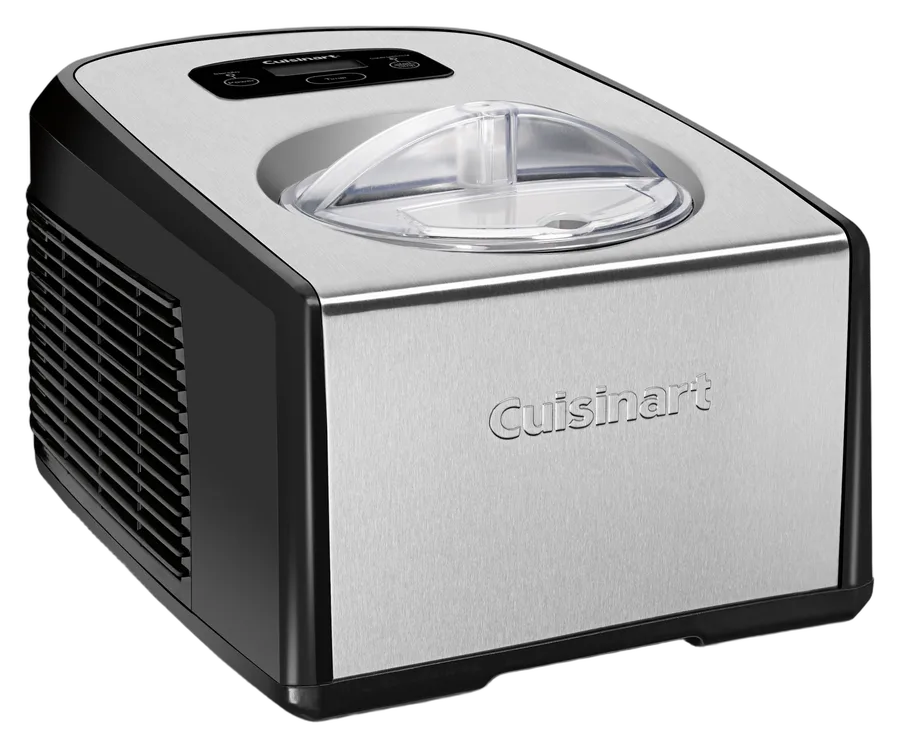 Built-in freezerA compressor chills the bowl as it churns
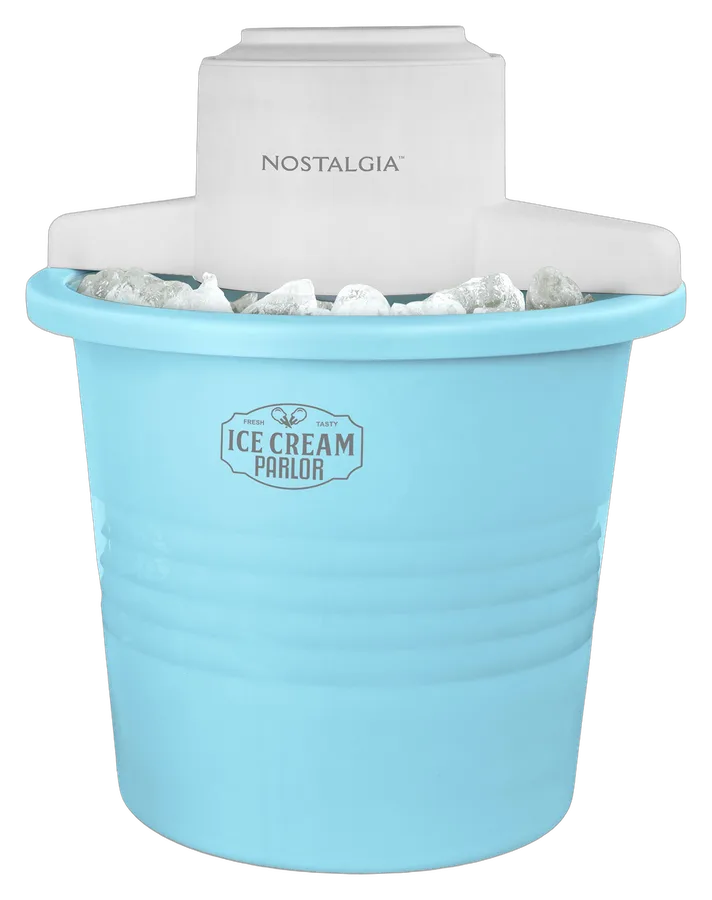 Ice and rock salt bucketA metal canister sits in a bucket packed with ice and rock salt while a motor or hand crank turns the dasher
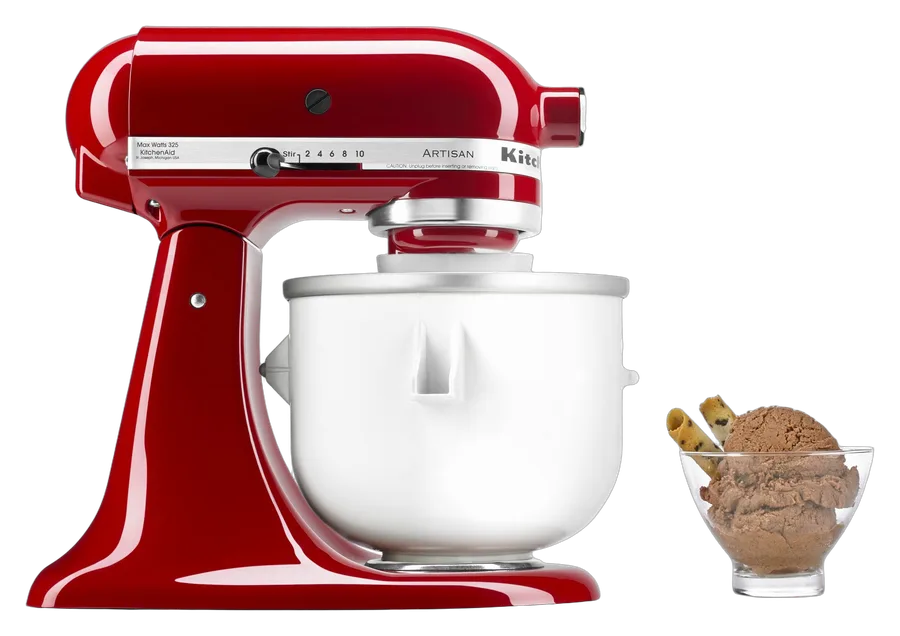 Stand mixer attachmentA freezer bowl and dasher fit a stand mixer
Method
- Step 1:
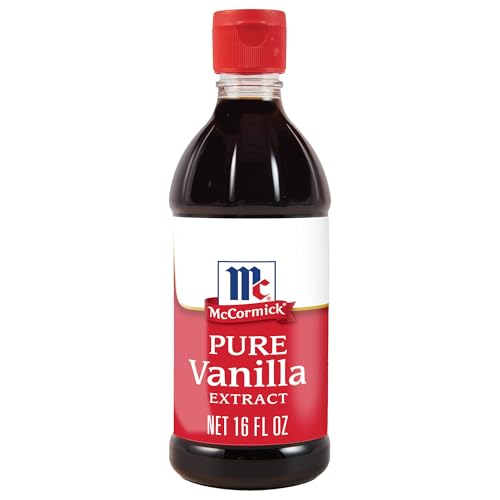
Blend the cottage cheese, milk, maple syrup, vanilla and salt for at least 1 minute, until no curds remain.
1 minute - Step 2:
Chill the base until cold, at least 2 hours, if churning.
2 hours
Then, depending on the machine:
Pint-style machine
- Step 3:
Pour the base into an empty pint up to the MAX FILL line (save any extra for a second pint), snap on the lid and freeze for 24 hours on a level surface in the freezer.
24 hours - Step 4:
Run LITE ICE CREAM (or ICE CREAM for 4% cottage cheese). RE-SPIN if crumbly.
Freezer bowl or stand-mixer bowl
- Step 5:
Freeze the bowl 16 to 24 hours ahead. Start the machine, pour in the cold base and churn until it looks like thick soft serve, usually about 20 minutes.
16 to 24 hours
Compressor machine
- Step 6:
Pour the cold base into the bowl, no more than about 60% full, and churn until thick, usually 30 to 60 minutes.
30 to 60 minutes
Ice-and-salt bucket
- Step 7:
Fill the chilled canister no more than two thirds full, layer crushed ice and rock salt around it to the top of the canister, and churn about 30 minutes, adding ice and salt as the ice melts.
30 minutes
Churned batches
- Step 8:
Spoon into an airtight container and freeze for 2 hours or more for a firmer scoop.
2 hours
Good to know
Watch out for
- Ninja's owner's guide says to freeze the base for at least 24 hours with the pint on a level surface, and not to process a pint that froze at an angle.
- Churned ice cream comes out soft. Cuisinart's booklet suggests 2 or more hours in an airtight container in the freezer for a firmer scoop, and says not to store dessert in the freezer bowl.
- Blend until completely smooth. Any curds left in the base stay grainy after freezing.
- Ninja's guide says RE-SPIN is often needed when a base is very cold (below -7°F, -22°C, about -22°C) and comes out crumbly or powdery.
- Amounts are for a standard 16 oz (473 ml) pint. For a 24 oz (710 ml) tub (CREAMi Deluxe or XL), multiply by 1.5 and fill to that tub's MAX FILL line.
- Cuisinart's ICE-21 booklet says a freezer bowl generally needs 16 to 24 hours in a 0°F (-18°C) freezer, and is ready when no liquid can be heard moving inside when it is shaken.
- Whynter's compressor manual says no pre-freezing is needed, a batch freezes in 30 to 60 minutes, and the mixture should fill no more than 60% of the bowl because it expands.
- Nostalgia's ice-and-salt manual says to fill the canister no more than two thirds full, layer crushed ice and rock salt around it up to the top of the canister, and churn for about 30 minutes or until the motor stops.
- ThermoWorks advises chilling a base to 43°F (6°C) or below before churning, especially in a freezer-bowl machine, which can only remove so much heat before it stops cooling.
Protein per serving depends on the powder, shake, milk or dairy used. Read the protein figure on each product's nutrition label; this page does not total it.
Questions
Does cottage cheese ice cream taste like cottage cheese?
It is tangy, a little like cheesecake. Vanilla, salt and the sweetener soften the dairy flavor, and blending removes the curd texture.
Can it be made without an ice cream maker?
It can be frozen in a container, but it sets icy and very hard. A pint-style machine or a churn machine gives the creamy texture.
Which cottage cheese works best?
Full-fat (4%) or 2% gives a creamier result than fat-free, which freezes harder.