Gelato is ice cream, in the sense that it is a frozen, stirred, sweetened dairy dessert. In Italian, "gelato" simply means "frozen" and is the everyday word for every kind of ice cream (Wikipedia, Gelato). In English the word has come to mean one style: the Italian artisanal kind, which is built differently from American ice cream in four ways. It has less fat, less air, often fewer eggs, and it is served warmer.
What is the difference between gelato and ice cream?
| Gelato | American ice cream | |
|---|---|---|
| Fat | About 4 to 9 percent (NPR); 6 to 9 percent butterfat for artisanal gelato in Italy (Wikipedia) | At least 10 percent milkfat by US law; 10 to 16 percent typical, higher in premium styles |
| Dairy | More milk, less cream | More cream |
| Air (overrun) | About 20 to 35 percent | From about 20 percent up to 100 percent, depending on the brand |
| Churning | Slow | Faster |
| Eggs | Often few or none; depends on the region | Common in custard styles; optional in Philadelphia style |
| Serving temperature | About 7°F (-14°C) to 12°F (-11°C) | About 10 to 15 degrees colder |
| Texture | Dense and soft | Lighter, with more air |
| Legal definition (US) | None of its own | 21 CFR 135.110 |
Sources for each row are discussed below.
What is gelato?
Gelato is an Italian style of ice cream made with a higher share of milk to cream, churned slowly, and served soft. Wikipedia describes its flavor as more intense than other frozen desserts, with a creamy, smooth, dense texture. Traditional flavors include fior di latte (plain sweet milk, no eggs and no flavoring), crema (custard), chocolate, hazelnut, pistachio and stracciatella, which is fior di latte with chocolate shards.
The style has long roots. Wikipedia credits Francesco Procopio dei Coltelli, a Sicilian, with bringing gelato to Paris in 1686 at his Café Procope, and Bruto Carpigiani of Bologna with the first automated gelato machine in the 1940s.
Is gelato legally different from ice cream in the US?
US federal rules set standards for ice cream and frozen custard, goat's milk ice cream, mellorine, sherbet and water ices, but none for gelato (21 CFR Part 135). A product sold as gelato with at least 10 percent milkfat and the other required solids could also meet the ice cream standard; one with less fat could not be labeled ice cream.
How much fat is in gelato vs ice cream?
US ice cream must contain at least 10 percent milkfat (21 CFR 135.110). Food scientist H. Douglas Goff gives 10 to as much as 16 percent for premium ice cream (Goff, University of Guelph), and the chef quoted by NPR puts most ice cream at 14 to 25 percent (NPR).
Gelato sits lower: about 4 to 9 percent according to NPR, 6 to 9 percent butterfat for artisanal Italian gelato according to Wikipedia. The difference comes from the dairy: gelato leans on whole milk, ice cream on cream.
Less fat sounds like it should mean less creamy. Gelato makes up for it with density, below.
How much air is in gelato vs ice cream?
Air is measured as overrun: how much bigger the frozen product is than the liquid mix went in. A base that goes in at 1 quart (946 ml) and comes out at 2 quarts (1.9 L) has 100 percent overrun, meaning it is half air.
- Ice cream. Penn State's food science department describes low-overrun ice creams at 20 to 40 percent, its own Berkey Creamery ice cream at 50 to 80 percent, and very high-overrun products at up to 100 percent (Penn State). Goff confirms ice cream can be up to half air by volume. US rules cap how far this goes by requiring ice cream to weigh at least 4.5 pounds (2 kg) per gallon.
- Gelato. Wikipedia gives 20 to 35 percent air; NPR gives 20 to 30 percent; Penn State describes gelato as having "very little to no air whipped in."
The reason is the machine. Penn State notes that a gelato machine's dasher moves slowly, compared with the faster rotation of an ice cream paddle, so it whips in less air. Less air means more flavor and more solids in every spoonful, which is why gelato reads as dense and rich despite having less fat.
Why is gelato served warmer?
NPR reports that authentic Italian gelato is typically served at 7°F (-14°C) to 12°F (-11°C), about 10 to 15 degrees warmer than ice cream. Penn State's Berkey Creamery serves its ice cream between 0°F (-18°C) and 10°F (-12°C).
The warmer temperature is part of the texture: with less air to soften it, gelato would be hard at ice cream temperatures. Goff notes that even at a typical ice cream serving temperature, a share of the water stays unfrozen as a concentrated sugar syrup, and a few degrees warmer leaves more of it liquid.
Does gelato have eggs?
Sometimes. Penn State says most gelato uses fewer egg yolks than ice cream and some uses none, with Sicilian gelato typically egg-free and northern Italian gelato made with cream and eggs. NPR's source says authentic gelato rarely uses yolks. Fior di latte has none.
American ice cream comes both ways. Philadelphia style has no egg; French or custard style is cooked with yolks. US "frozen custard" must contain at least 1.4 percent egg yolk solids by law (21 CFR 135.110).
Any homemade base with eggs should be cooked to 160°F (71°C), or made with pasteurized eggs (FDA, egg safety).
Is gelato or ice cream sweeter?
Neither by rule. Both use sugar for the same reason: Goff explains that dissolved sugar lowers the freezing point so part of the water stays liquid, which keeps the dessert scoopable. Gelato's lower fat and lower air let its flavoring come through more strongly, which can make it read as more intense.
How is gelato vs ice cream vs other frozen desserts?
| Dessert | Dairy | Typical fat | US standard | Where to read more |
|---|---|---|---|---|
| Ice cream | Cream and milk | 10 percent milkfat minimum | 21 CFR 135.110 | how to make ice cream |
| Gelato | Mostly milk | About 4 to 9 percent | None | This page |
| Frozen yogurt | Yogurt and milk | Depends on the dairy used | None (federal) | frozen yogurt vs ice cream |
| Sherbet | A little milk | 1 to 2 percent milkfat | 21 CFR 135.140 | sorbet vs sherbet |
| Sorbet | None | None | Closest is water ices, 21 CFR 135.160 | Same page as sherbet |
Can you make gelato at home?
Yes. Any home ice cream maker can freeze a gelato base; the base is what makes it gelato. A typical home gelato base uses more milk than cream, a moderate amount of sugar, and either no eggs (fior di latte style) or a cooked custard. Two starting points: the plain gelato recipe and pistachio gelato.
Some machines have a setting for it:
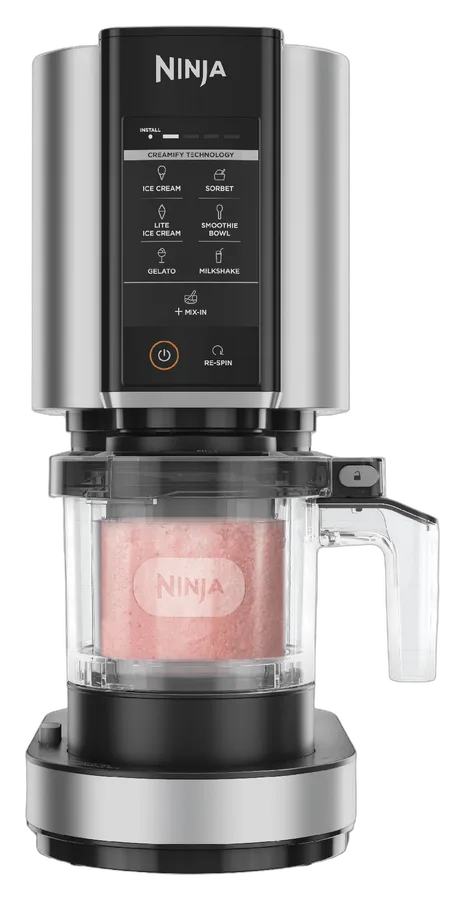
- Ninja CREAMi. The GELATO program is "designed for custard bases for Italian-style ice cream" on models that have it (Ninja NC300 owner's guide). See the Ninja CREAMi 7-in-1 NC301, and the CREAMi usage guide for the routine.
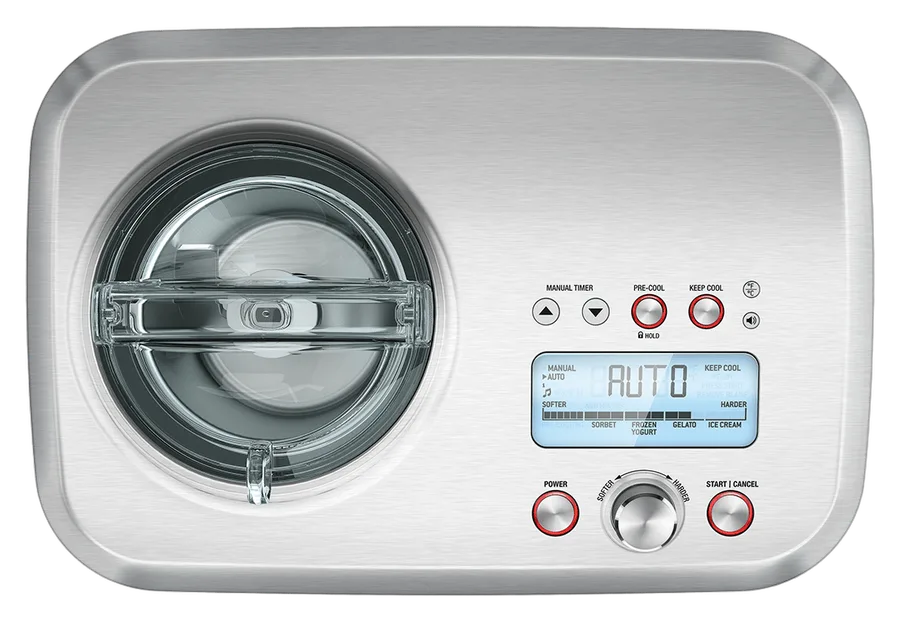
- Breville Smart Scoop. Its hardness dial has sorbet, frozen yogurt, gelato and ice cream settings, and the machine stops when the dessert reaches the chosen setting (Breville instruction book).
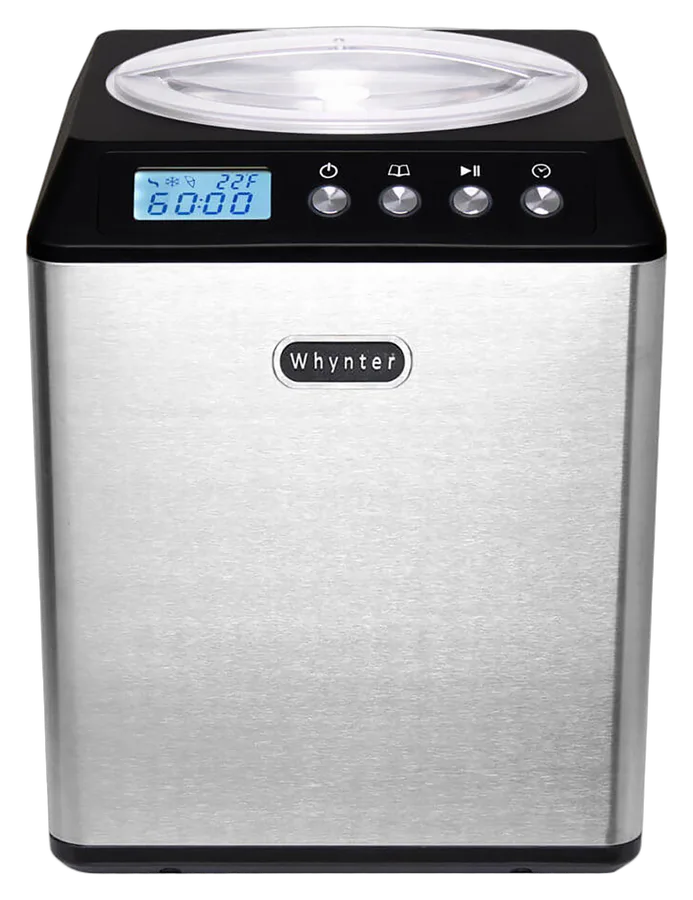
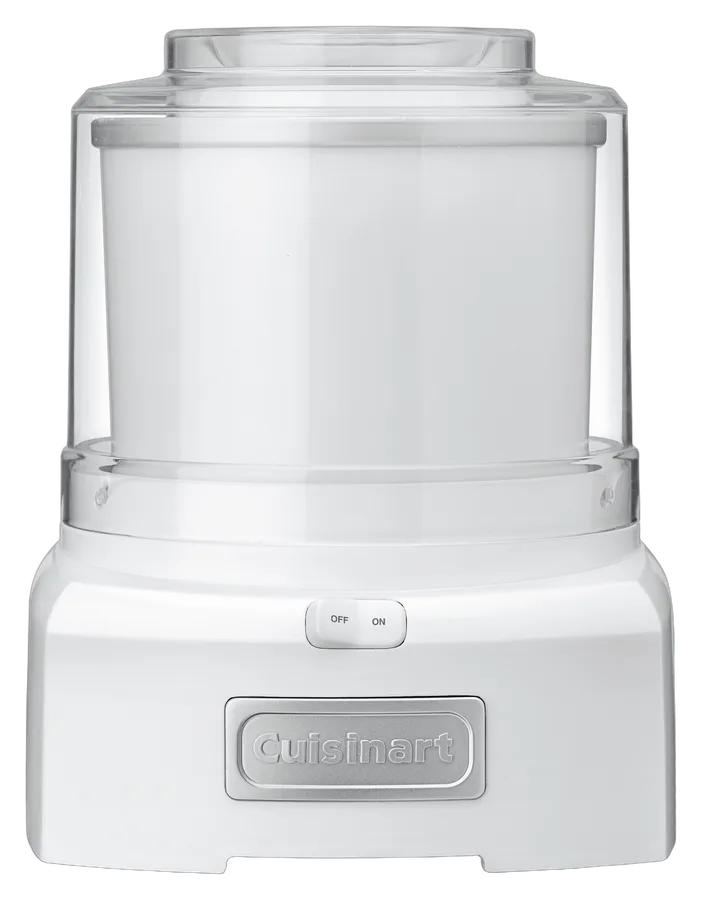
Freezer bowl and compressor machines without a gelato setting still work: churn a gelato base as usual and serve it straight from the machine or after a short firming, while it is still soft. Every type is listed on the ice cream makers hub.
Quick answers
Is gelato the same as frozen custard?
No. US frozen custard is ice cream with at least 1.4 percent egg yolk solids. Gelato often has few or no eggs, and less fat.
Does a cup of gelato hold more than a cup of ice cream?
By weight, usually yes. Gelato has less air, so the same cup holds more of the mix than a high-overrun ice cream does.
Is gelato just Italian for ice cream?
In Italy, yes: "gelato" is the general word for ice cream. In English it means the denser, lower-fat, slow-churned Italian style.
Can you keep gelato in a normal freezer?
Yes, but it hardens there. NPR notes gelato is meant to be served at 7°F to 12°F, warmer than a home freezer, so let it soften a few minutes before serving.