Every method of making ice cream does the same two things: it freezes a sweet dairy mix, and it keeps that mix moving while it freezes so the ice crystals stay too small to feel and some air gets folded in. The US definition says as much: ice cream is a food made "by freezing, while stirring, a pasteurized mix" (21 CFR 135.110). Machines differ only in where the cold comes from and what does the stirring.
What goes into homemade ice cream?
Food scientist H. Douglas Goff of the University of Guelph gives the typical make-up of ice cream: more than 10 percent milkfat (10 to 16 percent in premium styles), 9 to 12 percent milk solids-not-fat, 12 to 16 percent sweeteners, and the rest, usually 55 to 64 percent, water from the milk (Goff, University of Guelph). At home that translates to cream, milk and sugar, plus a flavor.
Each part has a job:
- Fat (from cream) gives richness and a smooth, creamy body.
- Milk solids help the ice cream hold its air.
- Sugar sweetens, and it also lowers the freezing point, so some water stays unfrozen even in the freezer. Goff notes that without that unfrozen water, ice cream would be too hard to scoop.
- Air is folded in by the stirring. Goff says ice cream can be up to half air by volume, and without it the result would be closer to an ice cube.
Philadelphia style or custard?
There are two common bases:
| Base | What is in it | Cooking | Texture | Example |
|---|---|---|---|---|
| Philadelphia style (no egg) | Cream, milk, sugar, flavor | None needed; whisk until the sugar dissolves | Lighter, clean dairy flavor | vanilla ice cream |
| Custard (French style) | Cream, milk, sugar, egg yolks | Cooked on the stove until thickened | Richer and denser; yolk is an emulsifier | French vanilla ice cream |
Goff points out that egg yolk was the original ice cream emulsifier. In US labeling, frozen custard must contain at least 1.4 percent egg yolk solids (21 CFR 135.110).
Is it safe to use eggs?
Cook them. The FDA says dishes containing eggs should reach 160°F (71°C), and that homemade ice cream made with raw or undercooked eggs should use pasteurized eggs or pasteurized egg products instead (FDA, egg safety). ThermoWorks, citing baker Rose Levy Beranbaum, gives 170°F (77°C) to 180°F (82°C) as the target for a custard base, which sits above the FDA minimum (ThermoWorks).
How do you make ice cream step by step?
- Make the base. Whisk cream, milk and sugar until the sugar dissolves, or cook a custard to at least 160°F.
- Chill it. ThermoWorks says to get the base to 43°F (6°C) or below, especially for freezer bowl machines. Cuisinart's ICE-21C booklet says cooked bases do better chilled overnight, or cooled over an ice bath (Cuisinart ICE-21C booklet).
- Freeze while stirring. In a machine, or by one of the no-machine methods below.
- Add mix-ins near the end. Cuisinart and Whynter both say about 5 minutes before the end of churning.
- Firm it up in the freezer. Fresh-churned ice cream is soft-serve thick. KitchenAid calls the freezer stage "ripening" and gives 2 to 4 hours (KitchenAid KSMICM manual).
Freezer bowls and compressors are covered in detail in how to use an ice cream maker.
How do you make ice cream with a machine?
Home ice cream makers fall into a few types. The steps above apply to all of them; what changes is the prep and the time.
| Machine type | Where the cold comes from | Prep before you start | Churn or process time | Maker's figures from |
|---|---|---|---|---|
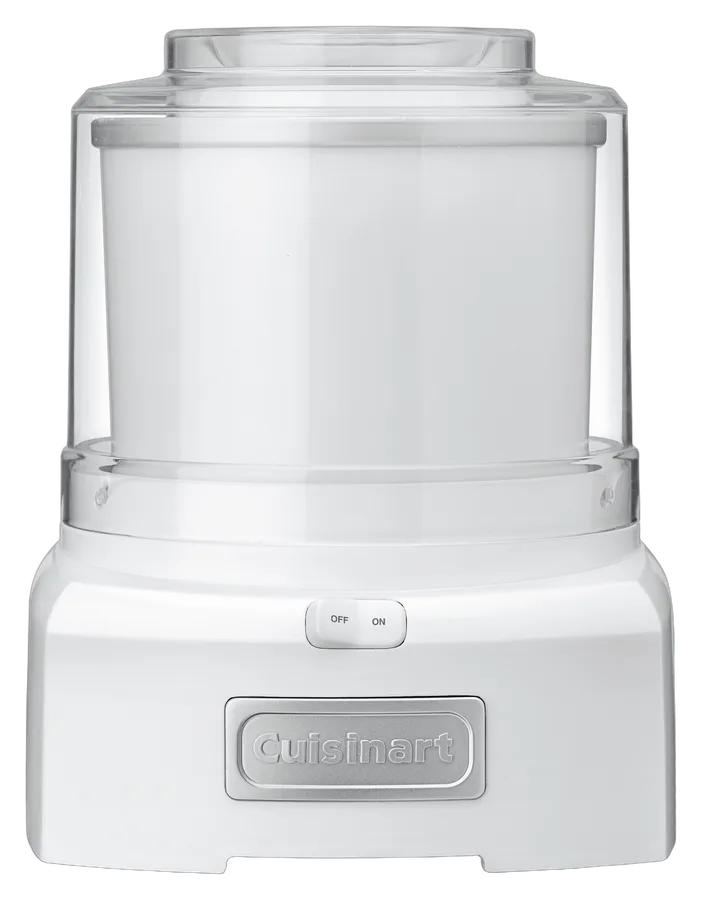
| Freezer bowl | A double-walled bowl frozen in your freezer | Freeze the bowl 16 to 24 hours | Under 20 minutes | Cuisinart ICE-21C booklet |
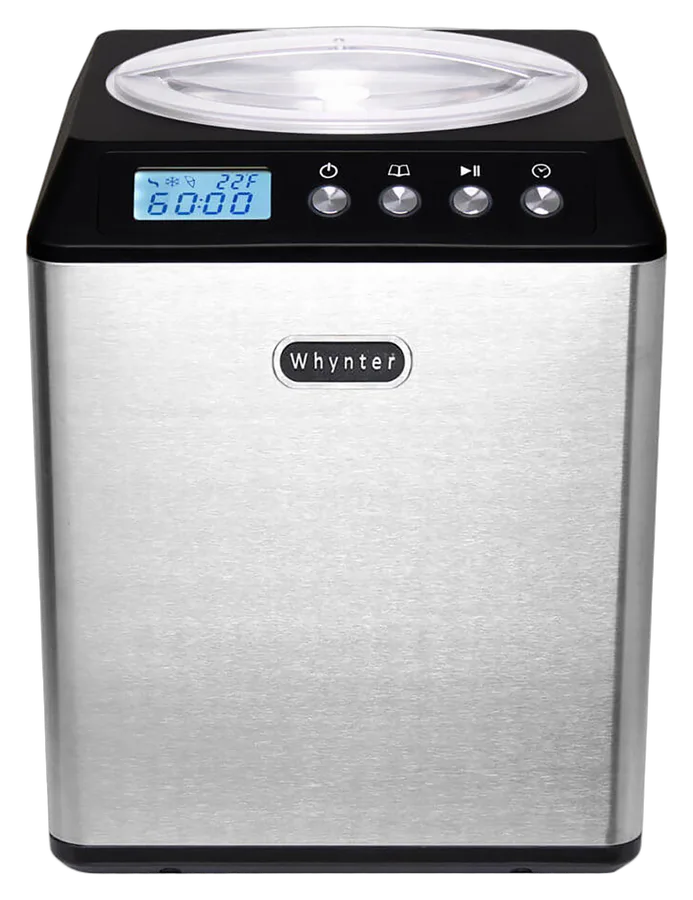
| Compressor | A built-in refrigeration unit | None; use a chilled base | 30 to 60 minutes | Whynter ICM-201SB manual |
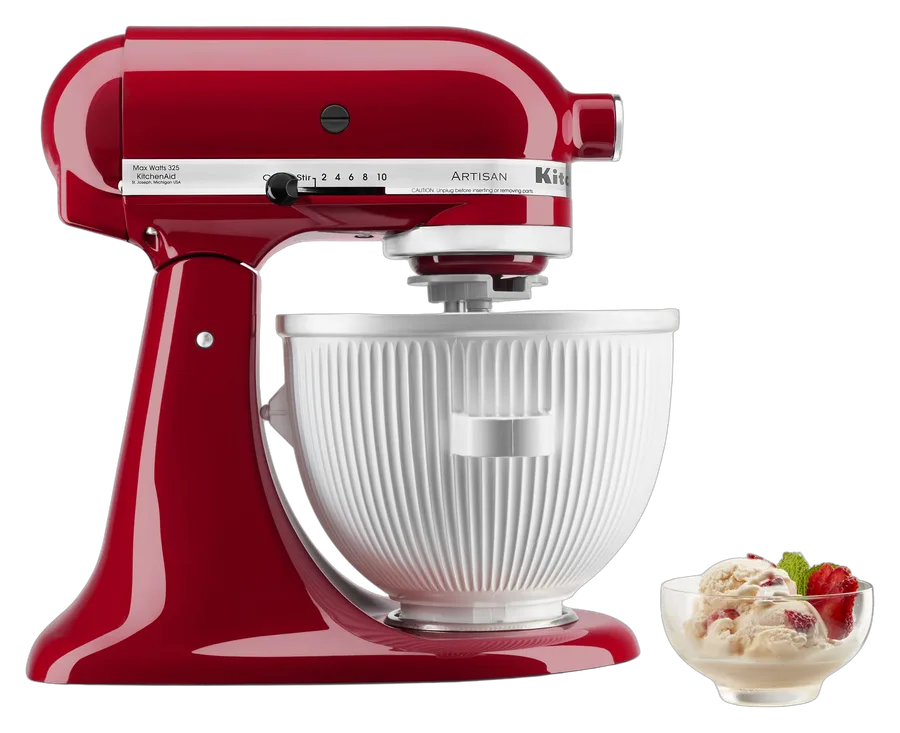
| Stand mixer attachment | A freeze bowl on the mixer | Freeze the bowl at least 16 hours | 20 to 30 minutes on STIR | KitchenAid KSMICM manual |
| Ice and rock salt | A bucket of ice and salt around a canister | Layer ice and salt to the top of the canister | About 30 minutes | Nostalgia ICMW400 manual |
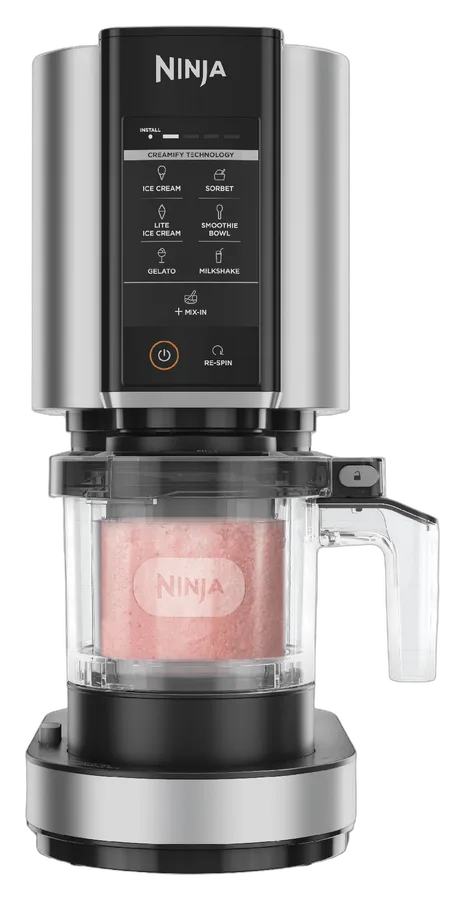
| Pint-style machine | Your freezer; the machine shaves the frozen base | Freeze the base in the pint at least 24 hours | 1 to 2 1/2 minutes per program | Ninja CREAMi NC300 owner's guide |
Freezer bowl machines
The bowl holds a cooling liquid between two walls. Cuisinart says to freeze it 16 to 24 hours at 0°F (-18°C) and shake it first: if no liquid sloshes, it is ready. Turn the machine on, pour the chilled base in while the bowl turns, and stop when it is as thick as you want, usually in under 20 minutes. The bowl warms up after one batch. The Cuisinart ICE-21 is a typical example.
Compressor machines
These have a small refrigeration unit, so there is nothing to pre-freeze. Whynter's ICM-201SB manual says a batch takes 30 to 60 minutes, that the bowl should be no more than 60 percent full, and that a refrigerated base finishes faster (Whynter manual). Breville's Smart Scoop guide puts ice cream at around 50 minutes (Breville instruction book). The Whynter ICM-201SB is one of these.
Stand mixer attachments
KitchenAid's attachment is a freeze bowl and dasher driven by the mixer. Freeze the bowl at least 16 hours, start the mixer on STIR before pouring in the base, and mix 20 to 30 minutes. Pouring the base in first can freeze it onto the bowl and lock the dasher, the manual warns.
Old-fashioned ice and salt makers
A canister of base sits in a bucket of ice and rock salt while a motor or crank turns a dasher. Salt melts the ice and pulls its temperature down; Goff gives -21°C (about -6°F) as the coldest a salt brine can reach. Nostalgia's ICMW400 manual says to fill the canister no more than two-thirds, layer ice and salt to the top of the canister, stir the ice every 10 to 15 minutes, and stop at about 30 minutes or when the motor stalls (Nostalgia ICMW400 manual). Browse these at old-fashioned ice cream makers.
Pint-style machines like the Ninja CREAMi
The Ninja CREAMi works the other way round. You freeze the base solid in its pint first, for at least 24 hours, on a level shelf, then the machine's blade shaves and whips it in 1 to 2 1/2 minutes (Ninja NC300 owner's guide). A crumbly result gets the RE-SPIN program. The full routine is in how to use the Ninja CREAMi.
How do you make ice cream without a machine?
In a bag
Goff describes a classroom version: in a small heavy-duty zip bag, seal 1 tablespoon sugar, 1/2 teaspoon vanilla and 1/2 cup (118 ml) milk. Put that inside a larger bag half full of ice, add 6 tablespoons of salt to the ice, seal, and shake for 5 to 10 minutes. It makes one small serving, soft and a little icy because the shaking adds little air. Salted ice gets far colder than plain ice, so a towel or gloves around the outer bag makes the shaking easier on the hands.
In the freezer, stirring by hand
Pour a chilled base into a shallow metal or glass pan and freeze it, stirring hard every 30 minutes so the frozen edges are broken up and mixed back in. Taste of Home's no-machine method stirs every 30 minutes until the mix is soft-frozen, about 4 hours (Taste of Home). Expect a denser, slightly icier result than a machine gives, since a spoon cannot stir constantly.
No-churn
No-churn recipes whip the air in before freezing instead of during it. Taste of Home's version folds 2 cups (473 ml) of heavy cream, whipped to stiff peaks, into a 14 ounce can of sweetened condensed milk with vanilla and a pinch of salt. The condensed milk's sugar keeps the mix soft enough to scoop.
| No-machine method | Time | Yield | Texture |
|---|---|---|---|
| Bag of ice and salt | 5 to 10 minutes of shaking | About one serving | Soft, slightly icy |
| Freezer and stirring | About 4 hours, stirring every 30 minutes | A loaf pan's worth | Dense, a little icy |
| No-churn (whipped cream and condensed milk) | Mix in minutes, then freeze until firm | A loaf pan's worth | Light, sweet, scoopable |
What are the common mistakes?
- A warm base. Every maker says to chill it first. A warm base melts a freezer bowl before it can freeze anything.
- Overfilling. The mix grows as air goes in. Cuisinart's ICE-21C stops at 1 1/2 quarts (1.4 L) and 1/4 inch (6 mm) below the rim; KitchenAid's attachment takes up to 46 ounces of base to make 2 quarts (1.9 L).
- Raw eggs. Cook custard to 160°F or use pasteurized eggs.
- Too little sugar or fat. Both keep the texture soft. Whynter lists low-fat bases and undissolved sugar among the causes of icy ice cream.
- Big mix-ins too early. Add them in the last few minutes, cut no larger than a chocolate chip (Cuisinart).
- Storing it in the freezer bowl. Cuisinart and KitchenAid both say to move it to an airtight container.
For specific flavors, from chocolate to strawberry, browse the ice cream recipes. To pick a machine type, try the machine finder.
Quick answers
How long does homemade ice cream take?
The churn takes under 20 minutes in a freezer bowl and 30 to 60 minutes in a compressor machine, plus 2 to 4 hours in the freezer to firm up. A pint-style machine needs the base frozen at least 24 hours first.
Can you make ice cream without cream?
Yes, but less fat means a firmer, icier texture. Whole milk alone works in the bag method; sorbets and dairy-free bases use fruit or plant milks instead.
Why is homemade ice cream so hard after freezing?
It usually has no stabilizers. Goff explains that stabilizers hold the unfrozen water in place so ice crystals do not grow, which keeps commercial ice cream smoother over time. Breville suggests letting frozen dessert sit at room temperature for 5 to 10 minutes before serving.
What salt goes with ice for ice cream?
Rock salt is traditional. Nostalgia's ICMW400 manual says table or kosher salt also works, and that a batch can take 2 to 4 cups (473 to 946 ml).